


Mid-Distance Mushing Philosophy – Strategy Over Speed
Covering 200 km behind a team of sled dogs is not a question of who runs fastest in the first hour. It is a question of who still has happy, healthy and motivated dogs at the finish line, which is the essence of the mid-distance mushing philosophy.
The mid-distance mushing philosophy rests on that idea: balancing speed, endurance, rest and canine welfare so that every dog performs as a willing athlete. In this 2026 guide, we explain what mid-distance mushing is, how it differs from sprint and long-distance racing, and why we see it as the most respectful way to race with sled dogs.
Mid-Distance Mushing Philosophy – Strategy Over Speed
Temps de lecture: about 8 minutes
What is mid-distance mushing and how long are the races?
Typical race distances and formats
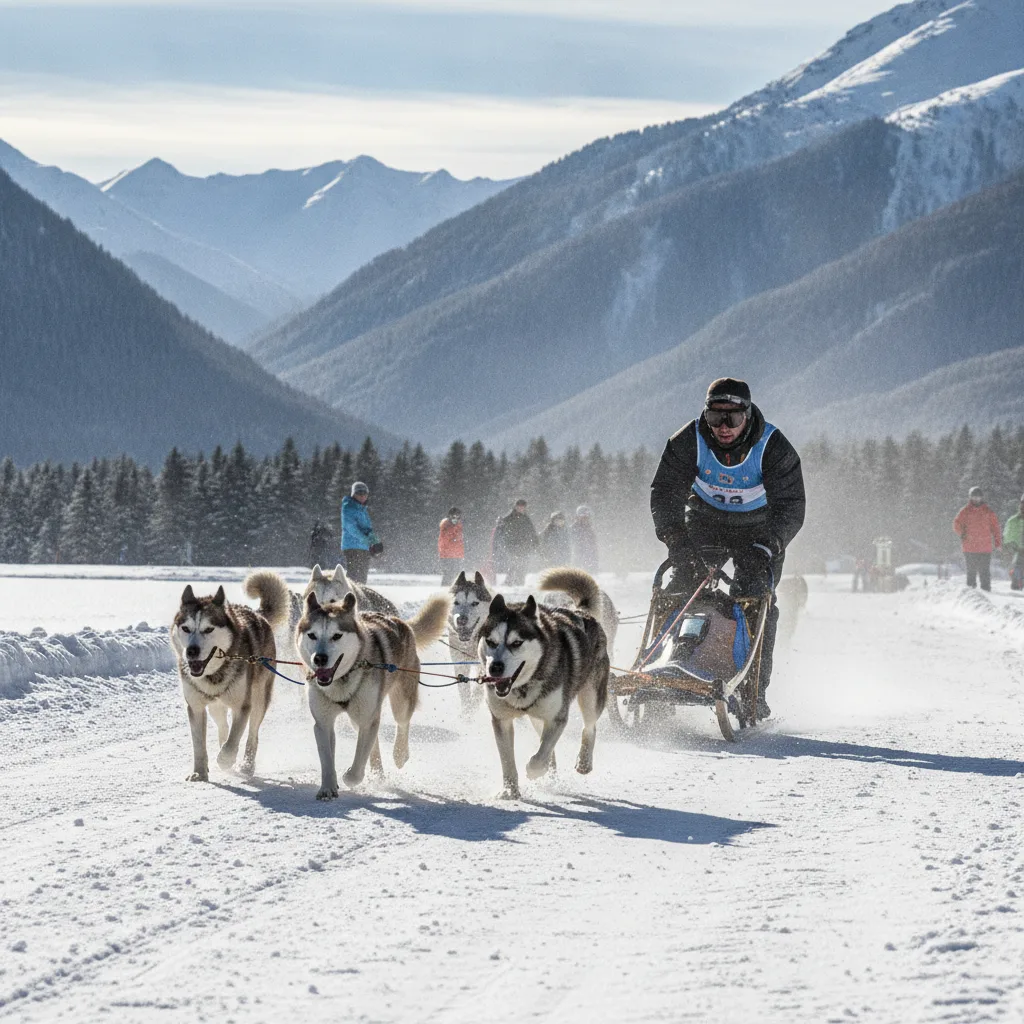
Mid-distance mushing is the category between sprint and long-distance racing. It requires enough speed to stay competitive, but also strong endurance, precise effort management and the ability to recover between stages. Formats vary from one federation and event to another, so there is no single official mid-distance sled dog race distance.

Some sources describe mid-distance events as races of roughly 200 to 400 miles, while other competitive formats organise stages of 30 to 60 km. The International Federation of Sleddog Sports (IFSS) includes mid-distance categories with 6 dogs in its race rules, and the dryland rules of ISDRA (International Sled Dog Racing Association) also define mid-distance teams of 10 or 12 dogs. Well known events such as the John Beargrease Sled Dog Marathon in Minnesota are often used as reference points for this style of racing.
A multidimensional discipline
Distance alone does not define the discipline, though. What makes mid-distance mushing distinctive is the combination of qualities it demands: a sustainable cruising speed, endurance, fast recovery, terrain management and close coordination between the musher and the dogs.
The mid-distance mushing philosophy: balance before speed
The mid-distance mushing philosophy can be summed up as a philosophy of balance. The main goal is to maintain a good pace without exhausting the team too early. A team that sets off at full speed often pays for it in the second half of the race, while a team that is too cautious loses its competitive edge. The right answer lies in between, and it changes with the temperature, the snow quality, the terrain and the fatigue level of each dog.
This approach also changes how sled dogs are perceived. They are not simply animals pulling a load. They are endurance athletes, capable of running long distances with a relatively light load once the sled is moving. Preparing them therefore goes far beyond pulling strength. It involves cardiovascular efficiency, muscular resistance, recovery capacity and mental freshness.
Finally, mid-distance mushing relies on cooperation. Lead dogs must follow commands, make decisions on the trail and stay motivated in changing conditions. The musher's role is less about imposing a direction mechanically and more about building a team that makes good decisions together. Musher-dog trust and communication are built over months of shared runs, not on race day.
Mid-distance vs sprint and long-distance mushing
Each racing category places different demands on the dogs and on the musher. The table below summarises the main differences.
Discipline | Main priority | Key characteristics |
Sprint mushing | Speed | Short efforts, high intensity, power and acceleration |
Mid-distance mushing | Balance between speed and endurance | Steady pace, strategy, rest and recovery, versatility |
Long-distance mushing | Endurance and self-sufficiency | Energy management, resistance, heavy logistics, extended duration |
Sprint mushing rewards explosive speed over short courses. Long-distance events such as the Iditarod Trail Sled Dog Race involve extended time on the trail with complex logistics. Mid-distance sits in the middle, which is precisely why it appeals to mushers who want competitive racing while keeping generous rest periods for their dogs.
Sled dog team roles and team size
A sled dog team is not a random line of dogs. Each position along the gangline has a specific function, and dogs are not interchangeable. The composition of the team takes into account temperament, physical condition, experience and how individual dogs complement each other.
Lead dogs run at the front. They respond to commands, choose the line on the trail and set the tone for the whole team. In endurance racing, a good lead dog generally combines independence, intelligence, attentiveness, confidence, a genuine love of running and the ability to handle a difficult trail.
Swing dogs run just behind the leaders and help the team negotiate turns by passing on changes of direction. Team dogs provide steady power and maintain the rhythm in the middle of the line. Wheel dogs, positioned closest to the sled, stabilise it and help propel it through curves and climbs.
As for team size, it depends on the rules of each event. The IFSS and ISDRA figures mentioned above show that a mid-distance team can range from 6 dogs to 10 or 12 dogs depending on the format. The breed most often found in these teams is the Alaskan Husky, a dog selected for its endurance, mental resilience and running efficiency, alongside Siberian Huskies and, in some teams, Eurohounds.
How to train a mid-distance sled dog team
Building an endurance base
Training for mid-distance racing is built gradually. Early sessions should be short and slow, then increase step by step in duration and difficulty without sacrificing recovery. Base training and mileage form the foundation, before hill work and interval sessions are added.

One example of an 8 to 10 week progression starts with very short runs focused on regularity during weeks 1 and 2, followed by a gradual increase in distance in weeks 3 and 4. Weeks 5 and 6 alternate easy endurance runs with more demanding sessions, and weeks 7 to 10 introduce longer runs, hill work and faster sequences.
Some recommendations mention runs of at least 30 miles once a mid-distance team is well prepared. These figures describe a structure, not a universal protocol. Each programme must be adapted to the age, breed, fitness level and experience of the dogs, as well as to the climate.
Managing recovery and seasonal conditions
Alternating effort and recovery is just as important as accumulating mileage. A common pattern is two days of activity followed by one day off, with a full recovery day every 7 to 10 days. After a demanding race, one to two weeks of reduced activity may be needed. Before the snow arrives, dryland mushing and cart training allow the team to build fitness on trails, provided temperatures stay low enough.
Good to know
When the weather gets warm, training intensity should drop sharply, with runs scheduled early in the morning or in the evening. Swimming, obedience or agility can keep dogs engaged without the same pulling load.
Pacing a team over 200 km: rest and recovery strategy
Defining a sustainable race pace
On a 200 km dog sledding course, pacing strategy is everything. The musher defines the plan according to the length of each stage, the elevation, the trail conditions, the temperature, the wind, the team's composition and its recovery capacity. The aim is a sustainable speed that the dogs can hold comfortably, rather than peaks of intensity followed by long slowdowns.
Planning rest stops and logistics
Rest stops are a strategic tool. They are used to hydrate, feed, examine and let the dogs recover. They need to be long enough to be useful, yet planned carefully so they fit the overall race strategy. Run/rest cycles are often prepared in advance, then adjusted on the trail depending on how each dog looks and moves. Hydration and snacking on the trail help maintain energy between longer breaks.
Route preparation completes the picture. Checkpoints and trail logistics, road crossings, supply points, resting areas and terrain hazards all need to be identified before departure. A musher who knows the trail can anticipate where the team will need more support and where it can cruise.
Dog welfare, heat management and safety
Health checks and veterinary oversight
Mid-distance mushing dog welfare is not an optional extra. Official race rules require dogs to be fit for the conditions, transported safely and treated humanely, and veterinary checks are part of competitive events. Along the trail, the musher keeps a constant eye on hydration, body temperature, paw pads and injuries, signs of excessive fatigue, feeding and the individual ability of each dog to continue.

Practical safety checklist on the trail
A practical safety checklist before training or racing usually includes the following points:
a health check of every dog before the run
paw and booty care, with pads inspected regularly
correct harness fit for each individual dog
gangline and snap hooks in good condition
enough water and food for the whole session
an emergency plan and a complete first aid kit
the option to drop a dog if its condition deteriorates
Preventing overheating and heat stress
Overheating and heat management deserve special attention, because nordic breeds are built for cold weather. Regular breaks are built into training so dogs can drink and cool down. Above all, safety always comes before performance. A dog showing an injury, unusual fatigue or abnormal behaviour should not continue without a proper assessment. Dropped dogs are not a failure, they are proof that the musher is listening to the team.
Is mid-distance mushing suitable for beginners?
Mid-distance racing itself is not a starting point. It requires experience in reading dogs, managing equipment and planning logistics. However, mid-distance mushing for beginners makes sense as a long-term goal and as a mindset from day one. Learning to drive a small team, respect run/rest cycles and observe each dog's behaviour is the same foundation that experienced mushers build on.
Many of our guests from the Netherlands have already tried husky trekking in the Netherlands, where flat terrain and milder winters mean most activities take place on dryland trails. Discovering mountain trails, real snow and the logic of endurance racing in the French Alps is a natural next step for them.
How we apply this philosophy at Husky Adventure
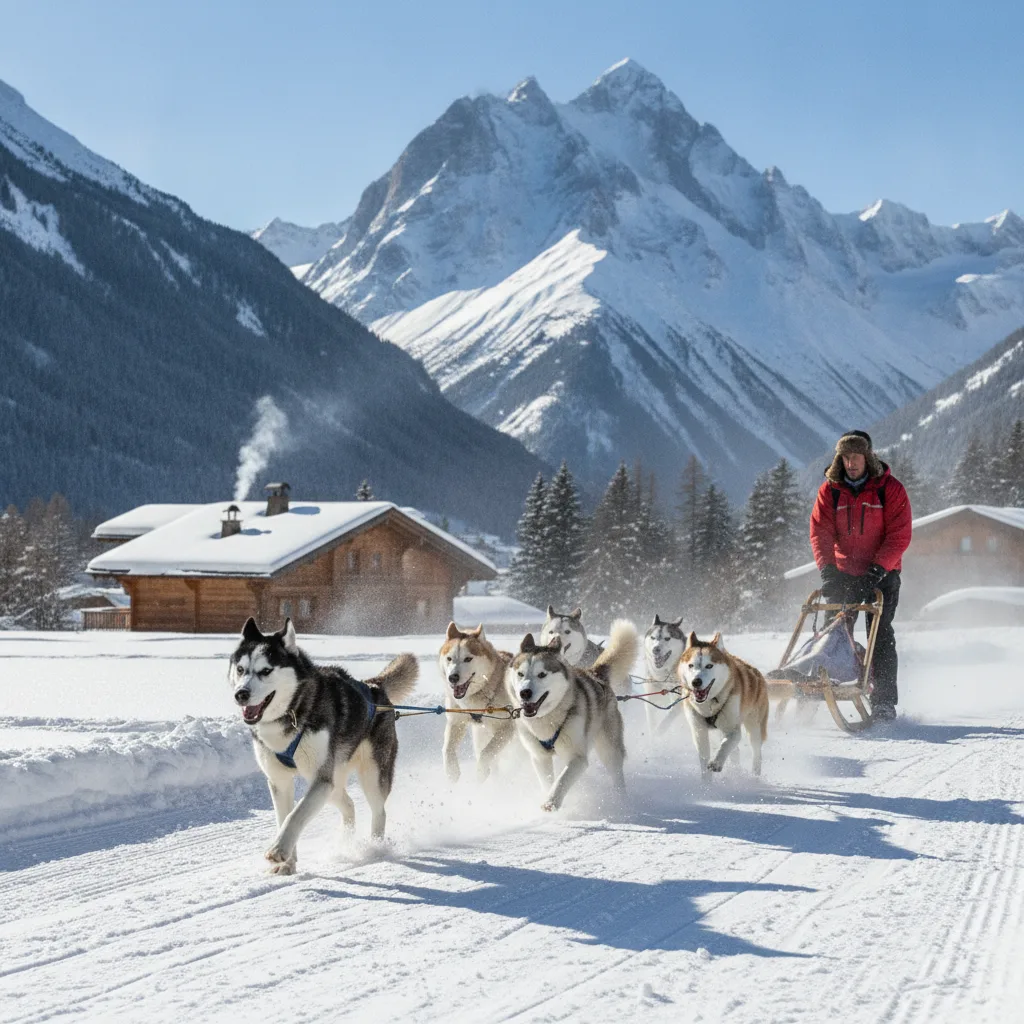
At Husky Adventure, based in Val Cenis in the Haute Maurienne Vanoise, the mid-distance philosophy shapes the way we live and race with our dogs. When we compete, we favour mid-distance formats with longer resting times for the dogs. Our Alaskan Huskies and Eurohounds are treated as canine athletes and family members, and their wellbeing is at the heart of everything we do.
The same spirit guides our activities with guests. In winter, you can learn to drive your own sled during an introduction session or enjoy a guided ride as a passenger. In summer and autumn, canicross, cani-hiking and cani-kart let you run alongside our dogs while respecting their pace and the temperature. You can also visit the dog's home to meet the team, understand how they train, rest and recover, and ask our mushers all your questions in English.
Key takeaway
A team that finishes healthy and eager to run again is the real measure of success in mid-distance mushing.
Why balance defines mid-distance mushing
Mid-distance mushing shows that strategy matters more than raw speed. By balancing a sustainable pace, careful training, well planned rest and constant attention to each dog, mushers can cover long distances while protecting the physical and mental health of their teams.
Compared with sprint and long-distance racing, it offers a demanding yet respectful middle ground. If you want to see this philosophy in action, we will be happy to welcome you in Val Cenis to meet our sled dogs and share the trail with them.
FAQ
What equipment does a mid-distance musher carry?
Beyond the sled, harnesses and gangline, a mid-distance musher carries water, food and snacks for the dogs, booties, a first aid kit and the items required by the race rules. Event regulations specify mandatory gear, so it varies from one race to another.
Why are Alaskan Huskies so common in mid-distance teams?
Alaskan Huskies are not a registered breed but a type of dog selected for running performance. Their endurance, efficient gait and appetite for running make them well suited to the balance between speed and stamina that mid-distance racing requires.
Do sled dogs enjoy running?
Well trained and well cared for sled dogs show strong enthusiasm before a run, which you can observe during a visit to our dog's home. Respecting rest, adapting distance and stopping a dog when needed is what keeps that motivation intact.
Can children meet the dogs and take part in activities?
Yes, families can meet our dogs and discover their daily life. Age conditions depend on the activity, so we recommend checking the details of each experience or contacting us before booking.
What happens to the dogs in summer?
Summer is a lighter season focused on maintaining fitness while avoiding heat. Activities take place during cooler hours, with shorter outings adapted to the temperature.

Commentaires