


How to Become a Professional Musher in France in 2026
Temps de lecture : 10 min
Every season, guests who meet our sled dogs in Val Cenis ask the same question at the end of their ride: how do you devenir musher professionnel France, that is, become a professional musher in France? The answer is less simple than it seems. French training bodies distinguish between running discovery rides and teaching dog sled driving, and each activity relies on a different qualification.
Following the daily experience of Christophe Caron, musher at Husky Adventure in the Haute Maurienne Vanoise, this 2026 guide explains the diplomas, entry tests, regulations and real working conditions of the job.
How to Become a Professional Musher in France in 2026 (devenir musher professionnel France)

What a professional musher actually does
From the outside, the job looks like gliding through snowy forests behind a sled dog team. In reality, dog sled driving is only one part of a long working day. According to France Travail and its MétierScope job profile, the musher guides sled excursions in natural areas, which requires full control of the team and constant adaptation to terrain and conditions. The CIDJ adds that the job includes looking after the dogs and that both practical and theoretical skills are needed to educate them and drive a team.

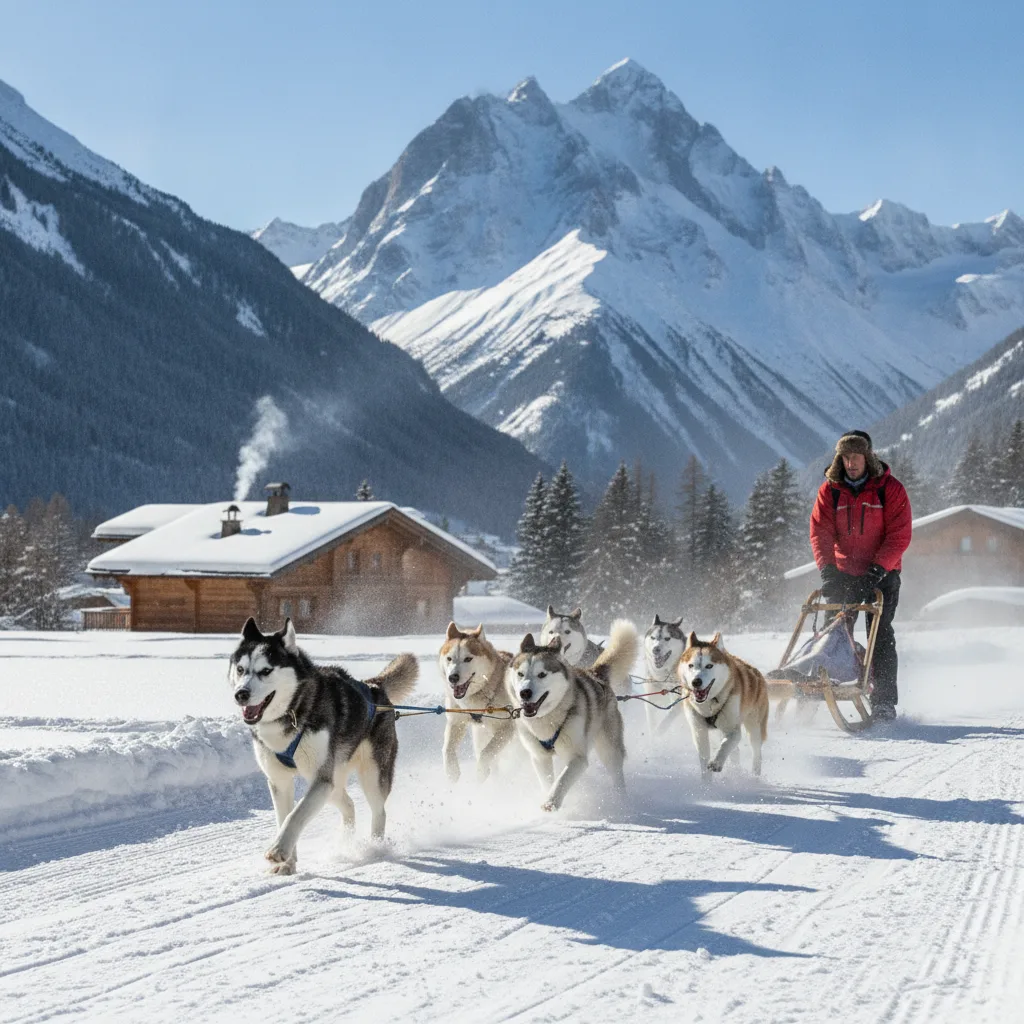
The daily routine of Christophe Caron at Husky Adventure illustrates this balance. Before any guest arrives, the dogs are fed, checked and given time to rest and play at the dogs' home. Sled dog training and conditioning continue throughout the year, with dog sledding rides in winter, kart and wheeled rig mushing when there is no snow, canicross and cani-balades in summer, and visits for guests who want to understand how the dogs live. This four season rhythm is shared by many professionals, because off snow dog traction keeps the dogs fit and the activity running outside the winter months.
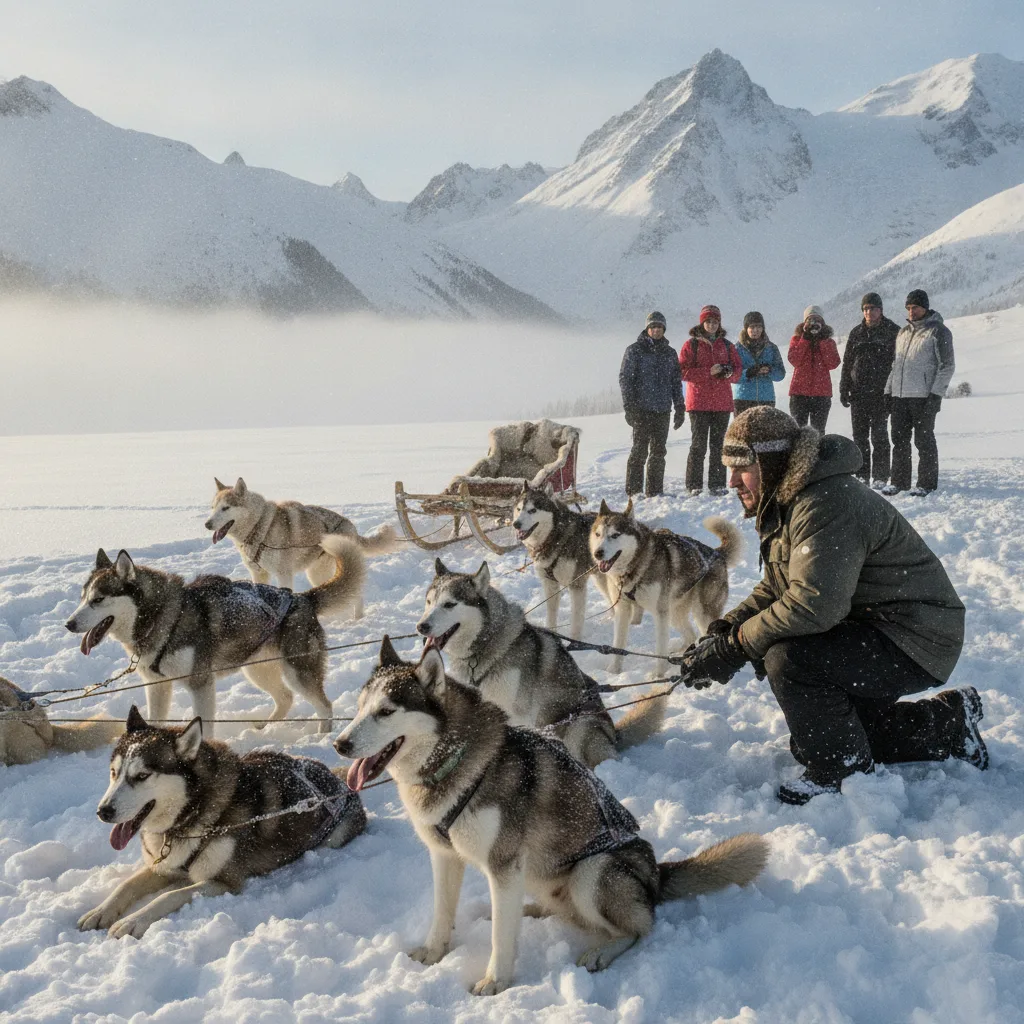
The job also involves a strong human side. Guides welcome families, couples and groups, explain safety rules, adapt the activity to each participant and pass on a respectful view of the animals. For us, the wellbeing of the dogs comes first, and this principle shapes every decision, from the length of an outing to the choice of which dogs take part.
Which qualification do you need to work as a musher in France?
There is no single route into the profession. The qualification you need depends on the services you plan to offer. Official sources describe two main paths, and confusing them is one of the most common mistakes among future mushers.
The Musher sled dog driver professional title
The professional title Musher conducteur de chiens attelés is registered with France Compétences in the RNCP (Répertoire national des certifications professionnelles) under number 42334. Its official description covers the skills needed to create a structure offering dog sledding rides on snow or off snow, kart rides with dogs and cani-balades. In other words, this title focuses on discovery activities where the guest is mainly a passenger or a walker, accompanied by the musher.
The France Compétences record also lists prerequisites that are distinct from the title itself, including the ACACED, TAV training and a first aid certificate such as SST or PSC1. Professional liability insurance is also mentioned.
The DEJEPS in canine sledding
The DEJEPS (Diplôme d'État de la jeunesse, de l'éducation populaire et du sport), specialty sports development, attelages canins option, is a state diploma linked to the Ministère des Sports. According to CREPS Auvergne-Rhône-Alpes, which runs the training, it covers dog sled driving and several related disciplines, as well as introduction, instruction, training and technical coordination. The CIDJ states that the DEJEPS is the diploma indicated for teaching dog sled driving. This is the qualification to consider if you want to become a sled dog instructor and run sessions where guests learn to drive their own team.
The table below summarises the main differences, based on the information published by France Compétences, the CREPS and the CIDJ.
Criteria | Musher professional title (RNCP42334) | DEJEPS attelages canins |
Main purpose | Creating a structure offering discovery activities with dogs | Teaching, training and coordinating sled dog disciplines |
Typical services | Sled rides on snow or off snow, kart rides, cani-balades | Introduction and instruction in dog sled driving, coaching, technical coordination |
Reference body | France Compétences | Ministère des Sports, delivered by CREPS Auvergne-Rhône-Alpes |
Related prerequisites | ACACED, TAV training, SST or PSC1, professional liability insurance | Entry tests, PSC or equivalent, ACACED, TAV training depending on the stage, liability insurance |
Training volume | To be confirmed with the training provider | 700 hours in centre and 500 hours in a host structure, according to the CREPS |
Good to know
The official sources advise against treating the DEJEPS as the only route for every activity. Before choosing a course, check the exact requirements for your project with the relevant authorities.
How to become a professional musher in France through the DEJEPS
The DEJEPS is selective, and candidates need solid experience before applying. According to CREPS Auvergne-Rhône-Alpes, the entry tests (tests d'exigences préalables) include driving a team of at least five dogs on a varied course, an orientation exercise with one dog and an interview about the candidate's professional project, which includes analysing a weather bulletin. The page also mentions prerequisites such as PSC or an equivalent first aid certificate, the ACACED and TAV training, depending on the stages of the course. Civil liability insurance is required to enter the training.
These tests show that the training is not designed to teach complete beginners how to drive a sled. Candidates are expected to arrive with real practice, often gained over several seasons alongside experienced mushers. Spending time in a professional structure, helping with dog care and assisting during rides, is a common way to build this experience before applying.
The CREPS announces a full course of 700 hours in centre and 500 hours of work based training in a host structure, for a total of 1,200 hours. Practical details such as locations, additional costs and the possibility of spreading the course over a longer period should be confirmed directly with the centre. The host structure stage is an important part of the learning process, because it places trainees in real situations with guests, dogs and changing mountain conditions, in regions such as the French Alps and the Jura.
Legal, animal welfare and insurance requirements
Beyond the diploma, several regulatory points apply to anyone working professionally with sled dogs. The France Compétences record for the professional title lists the following elements, which should always be checked against current regulations and the exact nature of your activity:
ACACED, the canine and pet animal professional certificate, linked to professional activity with companion animals, along with a declaration to the departmental veterinary services.
TAV, the live animal transport certificate, which concerns the transport of vertebrate animals under certain conditions, notably commercial transport over 65 km.
Professional liability insurance, to cover your activity and your guests.
A first aid certificate, SST or PSC1, required among the prerequisites for the certification.
These requirements reflect a broader responsibility. A musher is accountable for the safety of guests and for the health of every dog. At Husky Adventure, animal welfare and ethology are not abstract subjects. They guide how we organise rest periods, adapt outings to the weather and follow each dog throughout its life. The same philosophy applies to competition, where we favour mid distance races with longer resting time for the dogs.
Important
The regulatory obligations described here may change and can depend on your specific situation. Always confirm them with France Compétences, the CREPS, the departmental veterinary services and your insurer before launching an activity.
Skills you need to guide sled dog excursions
The skills expected from a musher go well beyond driving technique. The DEJEPS entry tests already assess orientation and weather bulletin reading, and the training programme covers regulations, ethology and animal welfare, according to the CREPS. In the mountains, navigation and orientation skills, avalanche awareness and the ability to read changing conditions are part of everyday safety.

Dog knowledge is just as central. A musher needs to understand breeds such as the husky, the Alaskan husky, the Greenland dog or the Eurohound, as well as their physical abilities, their personalities and their needs at each stage of life. Dog care and management of the dogs' home, nutrition, veterinary follow up and progressive conditioning take up a large share of the working week. A report published by Le Dauphiné Libéré in 2026 describes learning to become a musher as an investment of time and money, and notes that it takes several years to train a dog properly. This is a field testimony rather than a regulatory duration, but it reflects what professionals experience.
Finally, the CIDJ highlights the importance of interpersonal skills and organisation, and for independent mushers, management and marketing skills. Explaining safety rules in clear language, reassuring a hesitant child, adapting a session for a mixed ability group or answering questions in English for international guests are all part of the job in a destination like Val Cenis.
Can you make a living as a musher? Seasonality and business realities
The CIDJ indicates that mushers generally work on their own account. This means that knowing how to start a dog sledding business in France matters as much as knowing how to drive a team. Self employment involves business management, pricing, insurance, customer relations, online visibility and partnerships with tourist offices and local accommodation.
Seasonality is the other major challenge. Winter remains the busiest period, while summer and autumn depend on the ability to offer off snow activities. A regional press article from La Montagne reports that the activity can take a long time to develop and that some professionals combine several activities. This source illustrates field realities rather than providing sector statistics, and no reliable salary data is available to give an average income.
This is one reason why many structures, including ours, have developed four season activities with sled dogs. Canicross, cani-balades, kart rides and visits to the dogs' home allow the dogs to stay active all year and help balance the economic model. For people considering working as a musher as a seasonal job, gaining experience in an established structure is often a realistic first step before creating their own business.
Steps to plan your musher career in France
If you are seriously considering this path, a gradual approach helps reduce risks. Here is a practical sequence based on the official sources:
Define your project, discovery rides or instruction, to identify whether the professional title or the DEJEPS fits your goals.
Gain field experience in a professional structure, with dog care, sled dog training and assistance during rides.
Obtain the required certificates, such as PSC1 or SST, ACACED and TAV, depending on your project.
Prepare the DEJEPS entry tests if you aim to teach dog sled driving, including team driving, orientation and weather analysis.
Build a business plan that takes seasonality, dog care costs and secondary income into account.
Key takeaway
A musher career in France rests on three pillars, the right qualification for your services, deep knowledge of the dogs and a sustainable business model.
Starting your musher journey
Becoming a professional musher in France is a demanding path that combines sports skills, animal expertise, regulatory knowledge and business management. The Musher professional title suits discovery activities such as sled rides and cani-balades, while the DEJEPS attelages canins prepares for teaching and coaching. Whatever the route, the dogs remain at the centre of the profession.
At Husky Adventure, in the heart of the Haute Maurienne Vanoise, we see every day that respect for the dogs and the bond between people and animals are what give this job its meaning. If you would like to discover this world before committing to training, a visit to our dogs' home or an introduction to dog sled driving is a concrete way to start.
FAQ
Can you legally teach dog sledding in France without a DEJEPS?
According to the CIDJ, the DEJEPS is the diploma indicated for teaching dog sled driving. The professional title focuses on discovery activities such as rides and cani-balades. Teaching or coaching guests to drive their own team therefore calls for the DEJEPS, and the exact requirements should be confirmed with the competent authorities.
Do you need your own dogs before starting the training?
The official sources do not require you to own a team before training. However, the DEJEPS entry tests involve driving at least five dogs, so you need regular access to a team, often through a professional structure where you can practise.
Is the profession open to English speakers or foreign candidates?
The training and official procedures are delivered in French by French bodies such as the CREPS and France Compétences. A good level of French is therefore needed for the courses, while English is a real advantage when welcoming international guests in alpine resorts.
Which sled dog breeds do professional mushers work with?
Mushers commonly work with huskies, Alaskan huskies, Greenland dogs and Eurohounds. Each breed has its own morphology, temperament and abilities, which influence training, care and the type of activity the dogs enjoy.
How can you discover the job before committing to a diploma?
The simplest way is to spend time with professionals. Visiting a dogs' home, taking an introduction to dog sled driving or trying canicross helps you understand the daily reality of the job, the care the dogs need and whether this lifestyle suits you.

Commentaires