


La Grande Odyssée sled dog race – route, stages and history
The La Grande Odyssée course chiens de traîneau, or sled dog race, is the flagship event of French mushing. Each winter, it takes dog teams and their mushers across the French Alps, from high-altitude resorts to quiet Nordic ski areas.
If you are planning a winter stay in Savoie in 2026, or simply curious about how sled dogs perform on Alpine terrain, this guide explains how the race works. It covers the route, stages, history and philosophy of the event, and its strong link with the Haute Maurienne Vanoise, where we share our daily life with our own sled dogs.
La Grande Odyssée course chiens de traîneau – route, stages and history
Temps de lecture : 8 min
What is La Grande Odyssée sled dog race?
La Grande Odyssée is an annual multi-stage sled dog race held in the French Alps, according to the official race website. Rather than one continuous run, it unfolds over several days. Each stage takes place in a different resort, village or Nordic ski area.
Mushers start each day with their dog team, cover a set course and reach a stage finish where their time is recorded. The cumulative times then produce the overall ranking.
The event is often described as the biggest sled dog race in Europe and one of the most demanding. Its identity comes from the mountains themselves. Steep climbs, technical descents, changing snow cover and cold winter conditions make it very different from a flat course. For many people, it is the reference when they think of a dog sled race in France.
You may also see the longer name La Grande Odyssée Savoie Mont Blanc. This title was used for earlier editions. The official race website now uses the shorter name La Grande Odyssée.
When is the next edition of La Grande Odyssée?
The official race programme lists the next edition from 7 to 19 January 2027. That represents 13 days of racing and public events.
The programme opens with a prologue in Avoriaz on 7 January and ends with the final stage between La Toussuire and Le Corbier on 19 January.
Good to know
Route details, timings and access arrangements can change between the announcement of the programme and race week. Before travelling to watch a stage, check the official programme and the information published by the host resort.
La Grande Odyssée route and stages
The race crosses resorts, villages and towns in the Auvergne-Rhône-Alpes region, with stages in Haute-Savoie, Savoie and Isère. For the upcoming edition, the official programme includes a prologue and 11 numbered stages. Stage 9 is split into two parts, 9A and 9B.

Prologue to stage 6 (7–13 January)
Date | Stage | Location |
7 January | Prologue | Avoriaz |
8 January | Stage 1 | Avoriaz to Montriond |
9 January | Stage 2 | La Chapelle-d'Abondance |
10 January | Stage 3 | Saint-François-Longchamp to Doucy-Valmorel |
11 January | Stage 4 | Savoie Grand Revard |
12 January | Stage 5 | Les 7 Laux |
13 January | Stage 6 | Col de Porte |
Stage 7 to stage 11 (14–19 January)
Date | Stage | Location |
14 January | Stage 7 | Villard-de-Lans |
15 January | Stage 8 | Aussois |
16 January | Stage 9A | Bessans, Bonneval-sur-Arc and Val Cenis Base Polaire |
17 January | Stage 9B | Val Cenis to Lac du Mont-Cenis |
18 January | Stage 10 | Les Karellis |
19 January | Stage 11 | La Toussuire to Le Corbier |
Source: official race programme published on the La Grande Odyssée website.
The opening in Avoriaz has made the resort closely associated with the event, and many visitors know it as the Avoriaz sled dog race. Avoriaz also hosts a race village with public activities, according to the resort's tourism office.
La Grande Odyssée distance and elevation gain
Course distance and elevation gain
Regional tourism and resort sources, including Chambéry Montagnes and Avoriaz, describe a course of roughly 400 km with around 12,000 m of cumulative elevation gain. These figures are approximate and specific to recent editions. They can vary from one year to the next as the route evolves.
To put this in perspective, the elevation gain is spread over several stages. Teams climb towards mountain passes, cross high plateaus and descend through forests. Each stage is a mid-distance effort followed by a recovery period. This rhythm is essential. It allows the dogs to rest between efforts and stay in good condition throughout the multi-stage race.
La Grande Odyssée mushers and dogs
Mushers, sled dogs and handlers
According to Chambéry Montagnes, the event typically brings together around 65 mushers and approximately 600 dogs. The exact numbers depend on each year's entry list, published by the organisers ahead of the race.

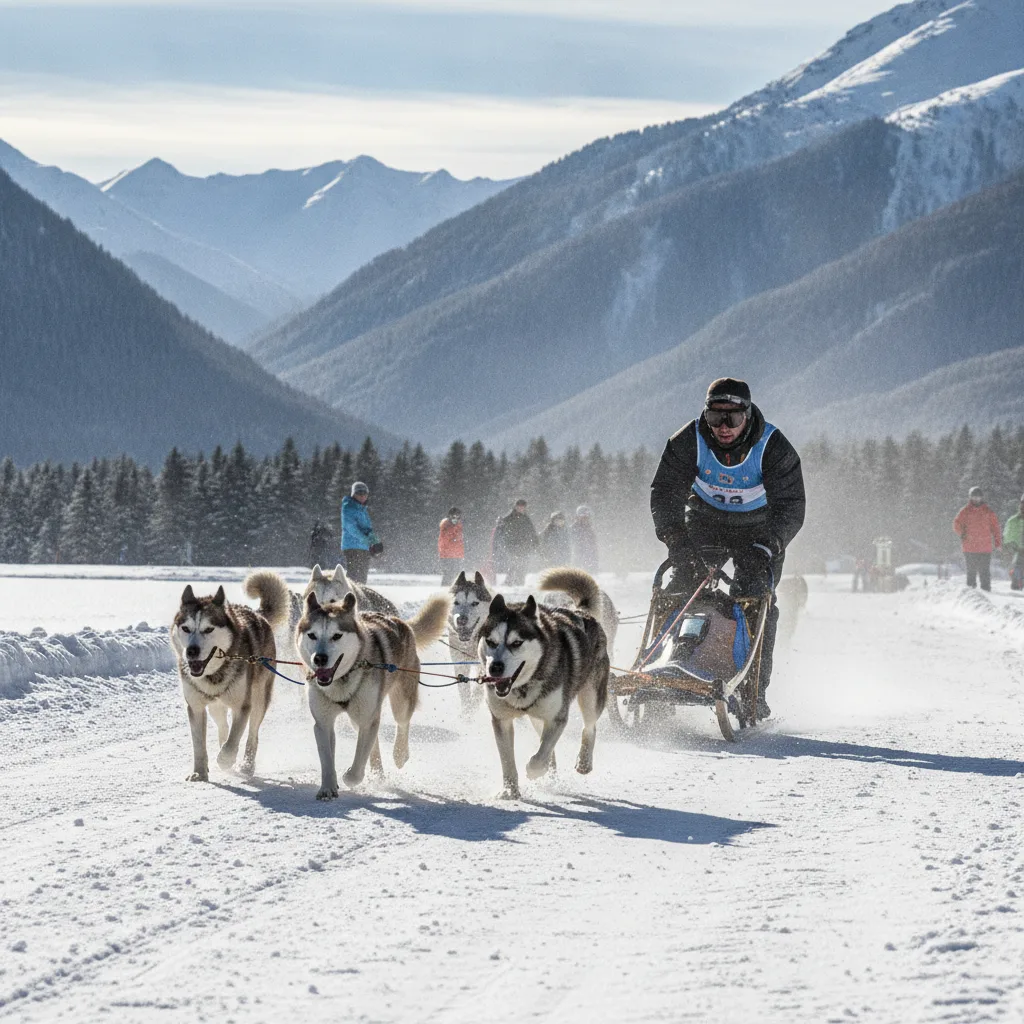
Most teams are made up of Alaskan huskies, a breed type selected for endurance, speed and a strong desire to run. You may also see Siberian huskies and Eurohounds, a cross between Alaskan huskies and pointer type dogs. Each musher is supported by one or more handlers. Handlers help with transport, feeding, harnessing and the daily care of the dogs.
Dog care is at the heart of a successful race. Mushers watch closely how each dog eats, drinks, moves and recovers. Veterinary checks are a standard feature of sled dog racing, and a team only performs well when every dog is healthy, motivated and well rested. In practice, careful team management matters as much as speed.
Important
A sled dog does not run because it is forced to. It runs because it loves it. Watching a team at the start line, you will hear the dogs barking with excitement, eager to set off. That is a good indicator of happy sled dogs.
Why is it one of the toughest sled dog races in Europe?
Several factors make this French Alps sled dog race particularly demanding. The terrain comes first. Unlike races held on flat or rolling ground, the Alpine terrain requires teams to manage long climbs and fast descents, often in the same stage. Mushers must constantly adapt their pace to protect their dogs.
Main challenges of the race
the cumulative elevation gain over the whole route, which tests the dogs' fitness and the musher's strategy
the changing winter conditions, from fresh powder to icy tracks, which affect speed and grip
the succession of stages over almost two weeks, which makes recovery and rest decisive
the logistics of moving teams, equipment and handlers from one resort to the next
The musher's role is demanding too. Driving a sled on mountain trails requires balance, anticipation and physical effort. On steep sections, mushers run alongside the sled or push to help their dogs. The bond between musher and dog team is what makes the difference over such a long programme.
La Grande Odyssée spectators, where to watch
The race is designed for the public as well as the competitors. Because it moves from one location to another, spectators can watch at different Alpine venues rather than only at a single start and finish line. Host resorts promote stage days and organise associated events, which makes the race an important moment for winter tourism in the region.

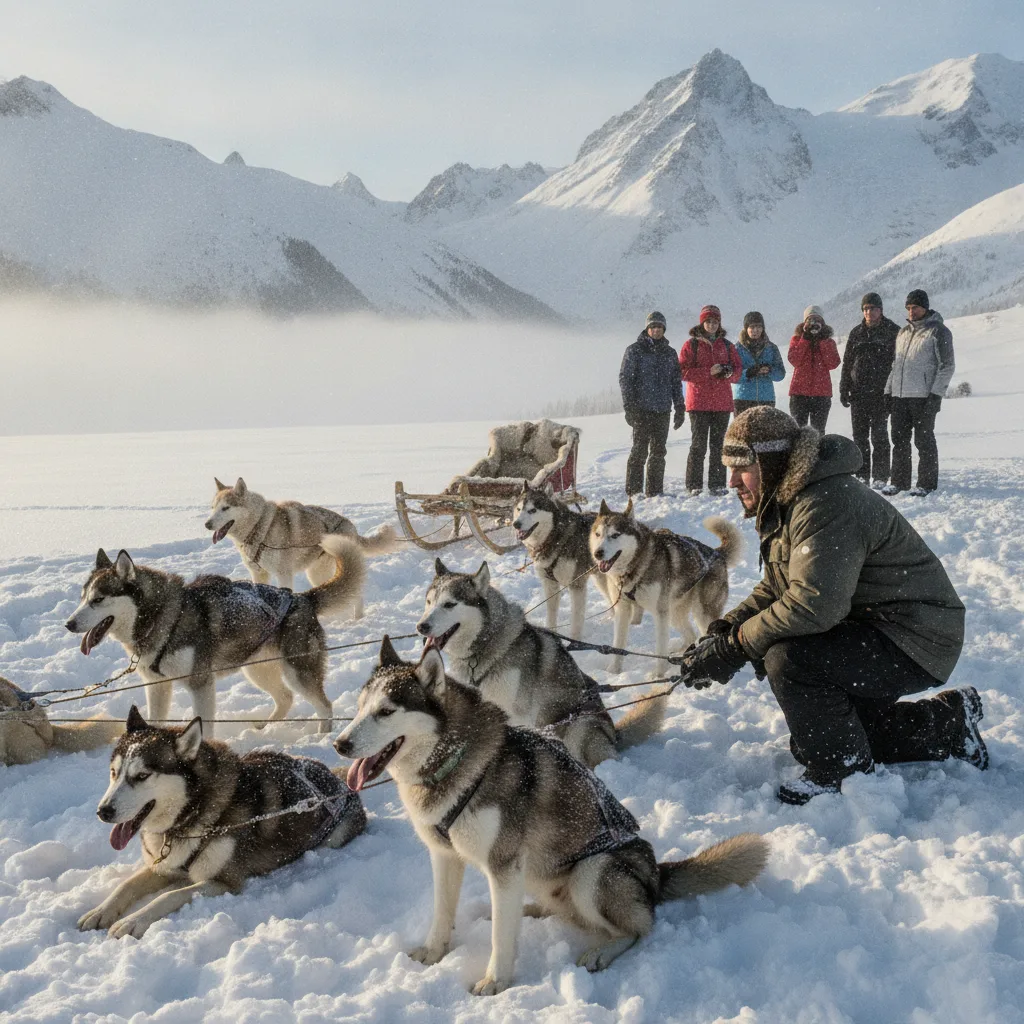
The start areas are usually the most lively spots. You can see the teams being prepared, the dogs harnessed and the mushers giving their final instructions. Stage finishes are another highlight, as teams arrive after hours on the trail. Nordic ski resorts often provide good viewing points along the track.
If you come to watch, dress warmly, follow the instructions of the organisers and stay behind the marked areas. Avoid calling or touching the dogs during the race. They need to stay focused on their musher and their trail.
La Grande Odyssée history, Nicolas Vanier and Henry Kam
The first edition took place in January 2005. According to a tourism feature published by Barnes Mont Blanc, the idea came from Nicolas Vanier, the French explorer, writer and filmmaker, and Henry Kam. Together, they conceived a stage race in the Alps to revive sled dog racing in France and Europe.
Since then, the event has grown into one of the main gatherings of the European mushing community. It has contributed to the dog sledding tradition in the French Alps and introduced many winter visitors to the world of sled dogs.
The Haute Maurienne Vanoise, a key part of the route
The Haute Maurienne Vanoise plays a central role in the upcoming edition. Stage 8 takes place in Aussois. Stage 9A links Bessans, Bonneval-sur-Arc and Val Cenis Base Polaire. Stage 9B runs from Val Cenis to the Lac du Mont-Cenis. Les Karellis, in the wider Maurienne valley, hosts stage 10.
This concentration of stages reflects what the valley offers mushers: high-altitude plateaus, reliable snow cover and wide open spaces. These are the same landscapes where we take our guests every winter, less than 20 minutes from our activity sites.
At Husky Adventure, we follow the races closely and take part in competitions ourselves. We favour a mid-distance philosophy, with longer resting time for our dogs. This approach reflects our core values: animal welfare, respect for each dog and the bond between people and animals. Our sled dogs, mostly Alaskan huskies and Eurohounds, live in their dog's home in the Haute Maurienne, where their daily wellbeing comes first.
If the race makes you want to experience sled dogs yourself, we offer winter activities in Val Cenis and Aussois. You can enjoy a guided sled ride as a passenger, which is ideal for families with children, or learn to drive your own dog team. In summer, the adventure continues with canicross, husky hiking and karting with sled dogs. You can also visit our dog's home to meet the dogs, learn about their breeds and understand their training. All our activities are guided by professional mushers and available in English.
Experiencing La Grande Odyssée in the French Alps
La Grande Odyssée is much more than a sporting event. It is a multi-stage Alpine mushing race that combines mountain terrain, skilled mushers and athletic dog teams over almost two weeks. With its stages in Aussois, Bessans, Bonneval-sur-Arc and Val Cenis, it also highlights the Haute Maurienne Vanoise as a natural home for sled dogs. Whether you come to watch a stage or ride behind a dog team yourself, it is a unique way to discover the French Alps in winter.
Final thoughts on La Grande Odyssée course chiens de traîneau
La Grande Odyssée course chiens de traîneau brings together demanding Alpine terrain, experienced mushers and enthusiastic sled dogs over a long multi-stage route. Whether you watch a stage in Haute Maurienne Vanoise or try a sled dog activity yourself, it offers an authentic way to experience winter in the French Alps while respecting animal welfare and the bond between humans and dogs.
FAQ
Do you need to buy a ticket to watch La Grande Odyssée?
Viewing arrangements are managed by each host resort and can differ from one stage to another. The safest approach is to check the official programme and the local tourism office of the resort you plan to visit.
Can children attend a stage of the race?
Yes, many families come to watch the starts and finishes. Children enjoy seeing the dogs prepared and the teams setting off. Make sure they stay warm and remain behind the barriers.
What is the difference between a sprint, a mid-distance and a long race?
Sprint races are short and fast. Mid-distance races involve longer runs organised with rest periods. A stage race like La Grande Odyssée spreads the effort over several days, with recovery between stages.
Can I try dog sledding near Val Cenis without any experience?
Yes. Beginners can enjoy a guided sled ride as passengers or take part in an introduction to driving a dog team with a professional musher. We adapt each activity to the age and level of participants.
What should I wear to watch a winter stage?
Plan for cold mountain conditions: warm layers, waterproof boots, gloves, a hat and sunglasses. You may stand outside for a long time at altitude, so it is better to bring an extra layer.

Commentaires