


History of Mushing in Europe, From Polar Trails to 2026
The history of mushing in Europe (histoire du mushing en Europe) is a long story that begins in the Arctic thousands of years ago and continues today on snowy trails in the Alps. Sled dogs first helped northern peoples travel, hunt and survive. They later supported polar expeditions and military logistics, before becoming the heart of a structured sport and a popular form of nature tourism.
In this article, we trace that journey step by step and explain where our own team in Val Cenis and the Haute Maurienne Vanoise fits into this tradition in 2026.
Temps de lecture : environ 10 minutes
History of Mushing in Europe (histoire du mushing en Europe), From Polar Trails to 2026
Table of contents
What Is Mushing?
Definition of mushing
Mushing refers to the practice of having one or more dogs pull a sled or another piece of equipment. In its modern sense, the word covers a whole family of disciplines: multi dog sled teams, one or two dog sleds, skijoring (where a dog pulls a skier), pulka, canicross, bikejoring and dryland formats using a kart or a dog scooter. The person who drives the team is called a musher, and the dogs are connected to the sled through a harness and a gangline.
This broad definition matters for anyone interested in the origins of dog sledding. Behind each discipline lies the same core idea, a partnership between humans and dogs built on trust, training and a shared effort across demanding terrain.
The Ancient Origins of Sled Dogs
Archaeological and genetic evidence
How old is dog sledding? Archaeological and genetic research suggests that sled dogs have been associated with human societies in the Arctic for around 9,000 to 9,500 years, according to work published by the University of Copenhagen, the University of Greenland and the University of Groningen. Studies of ancient DNA show that Arctic adapted dogs had already emerged at the transition between the Pleistocene and the Holocene.
Where does mushing come from? Genomic analyses published in Genome Biology and Evolution indicate that the main ancestry of modern sled dogs traces back to Siberia. Genetic traits linked to cold climate adaptation were already established around 9,500 years ago.
This Siberian ancestry is a key element of Arctic sled dog history, as it explains why northern dogs combined endurance, a resistant coat and an ability to cope with extreme cold.
How Sled Dogs Supported Arctic Communities
Traditional roles in Arctic communities
Long before it became a sport, traditional dog sledding was a means of transport for people and goods. The archaeological record shows that sleds also supported hunting, seasonal movements, migrations and human settlement across the Arctic. Without dogs, many northern territories would have been far harder to cross.
Traditional mushing was never a single, uniform practice. A recent ethnographic framework developed by researchers from Copenhagen and Greenland identified shared features of dog sledding while highlighting strong regional differences. Harnesses, sled designs and hitching methods varied from one community to another, shaped by local snow conditions, available materials and the type of loads carried.
Sled Dogs in Scandinavia History
In northern Europe, sled dogs played an important role in travel and transport across snow covered landscapes. The practice took root particularly in Norway, Sweden and Finland, where climate and geography made sleds a practical solution for winter mobility.
Scandinavia also gave rise to the pulka, a light sled pulled by a dog, often associated with a skier. This tradition is closely linked to skijoring history, since both disciplines combine Nordic skiing with the pulling power of dogs.
Lapland, which spans the north of Norway, Sweden and Finland, remains strongly associated with this heritage today. The long winters and wide open spaces of the region helped preserve a living winter sports tradition that still attracts visitors from all over Europe.
From Transportation to Polar Expeditions and Military Use
Exploration and military logistics
How were sled dogs used in polar expeditions and wars? At the beginning of the twentieth century, polar exploration brought sled dogs to the attention of the wider world. In 1911, the Norwegian explorer Roald Amundsen relied on sled dogs during his expedition to the South Pole. His choice demonstrated the efficiency of dog teams in the harshest environments on the planet.
During the same period and throughout the world wars, dog sleds were also used for military logistics. Teams transported supplies, evacuated the wounded and kept supply lines open in snowy forests and mountain areas where vehicles struggled to operate. These uses helped spread knowledge of mushing techniques well beyond Arctic communities.
The Emergence of Sled Dog Racing
From working teams to organised races
The history of sled dog racing as an organised sport begins in North America. The creation of the Nome Kennel Club in Alaska in 1908 is often seen as an important milestone in structuring the first competitions. Racing gradually turned a practical skill into a discipline with rules, categories and a growing audience.
In 1925, a relay of dog teams carried diphtheria serum to Nome, Alaska. According to Sur in English, the teams covered around 1,600 kilometres in less than a week in extreme winter conditions. This serum run to Nome captured international attention and strongly boosted the popularity of mushing, including in Europe.
Good to know
The 1925 serum run was a relay, which means many teams and mushers shared the distance. This collective approach to effort, with each team handing over to the next, remains an inspiring example of how dogs and people achieve remarkable things together.
When Did Mushing Arrive in Europe?
When did mushing start in Europe? Dog sledding itself was already present in the north of the continent for centuries, through Scandinavian and Arctic traditions. As a modern competitive sport, however, it arrived later.
When and where was the first sled dog race in Europe held? According to the sources consulted, the first European mushing competition was organised in Switzerland in 1965. From there, the discipline spread quickly across the continent.
This date marks a turning point in European sled dog racing history. Switzerland, with its alpine snow, its winter resorts and its strong culture of mountain sports, offered an ideal setting for this new activity.
The History of Mushing in Europe at a Glance
The following timeline summarises the key stages described in the sources.
Around 9,500 years ago: Arctic adapted dogs are associated with sled transport technologies.
Prehistory and antiquity: dogs are used for transport, hunting and travel in northern regions.
Early twentieth century: polar expeditions and military logistics make sled dogs widely known.
1908: creation of the Nome Kennel Club, a milestone for organised racing.
1911: Roald Amundsen uses sled dogs on his South Pole expedition.
1925: the serum relay to Nome brings mushing international fame.
1965: first European mushing competition in Switzerland.
Late twentieth century: racing, tourism and Nordic disciplines expand across Europe.
Twenty first century: growth of tourism, dryland mushing and higher standards of dog welfare.
Period | Key development |
Around 9,500 years ago | Arctic adapted dogs become associated with sled transport technologies. |
Prehistory and antiquity | Dogs support transport, hunting and travel in northern regions. |
Early twentieth century | Polar expeditions and military logistics make sled dogs widely known. |
1908 | Creation of the Nome Kennel Club, a milestone for organised sled dog racing. |
1911 | Roald Amundsen uses sled dogs during his South Pole expedition. |
1925 | The serum relay to Nome brings mushing international fame. |
1965 | First European mushing competition is organised in Switzerland. |
Late twentieth century | Racing, tourism and Nordic disciplines expand across Europe. |
Twenty first century | Tourism, dryland mushing and higher standards of sled dog welfare grow. |
Dog Sledding in the Alps and the Pyrenees
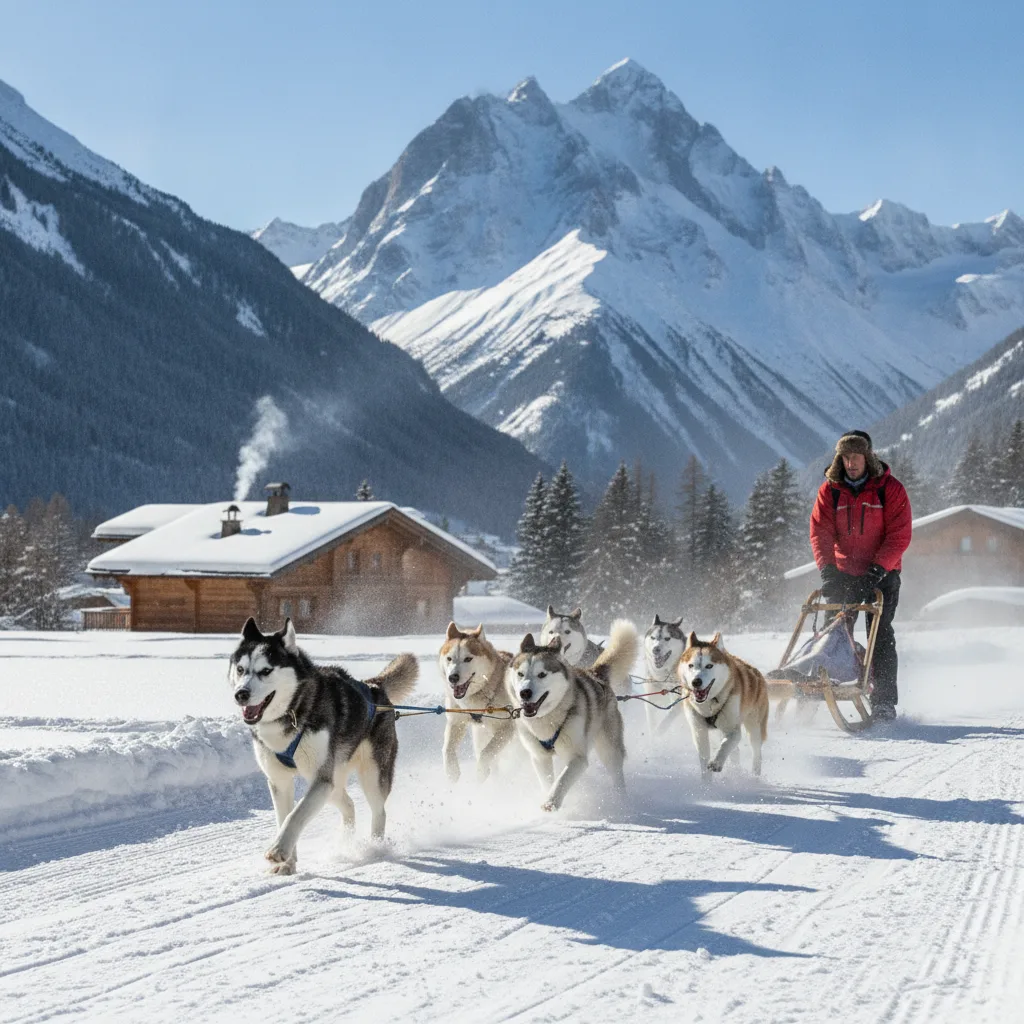
After 1965, the Alps became one of the main European areas for sporting mushing, alongside Scandinavia. Reliable snow cover, tourism infrastructure and a deep rooted culture of winter sports all favoured this development. French, Swiss and Italian valleys gradually welcomed races, clubs and professional mushers.

Further south, mushing also developed in Spain and in the Pyrenees. What was the Pirena race in the Pyrenees? The Pirena sled dog race was a major event whose route crossed Navarre, Aragon, Catalonia, Andorra and France. It brought international attention to mushing in southern Europe. According to Sur in English, the race was held until the early 2010s, with its last edition reported in 2012.
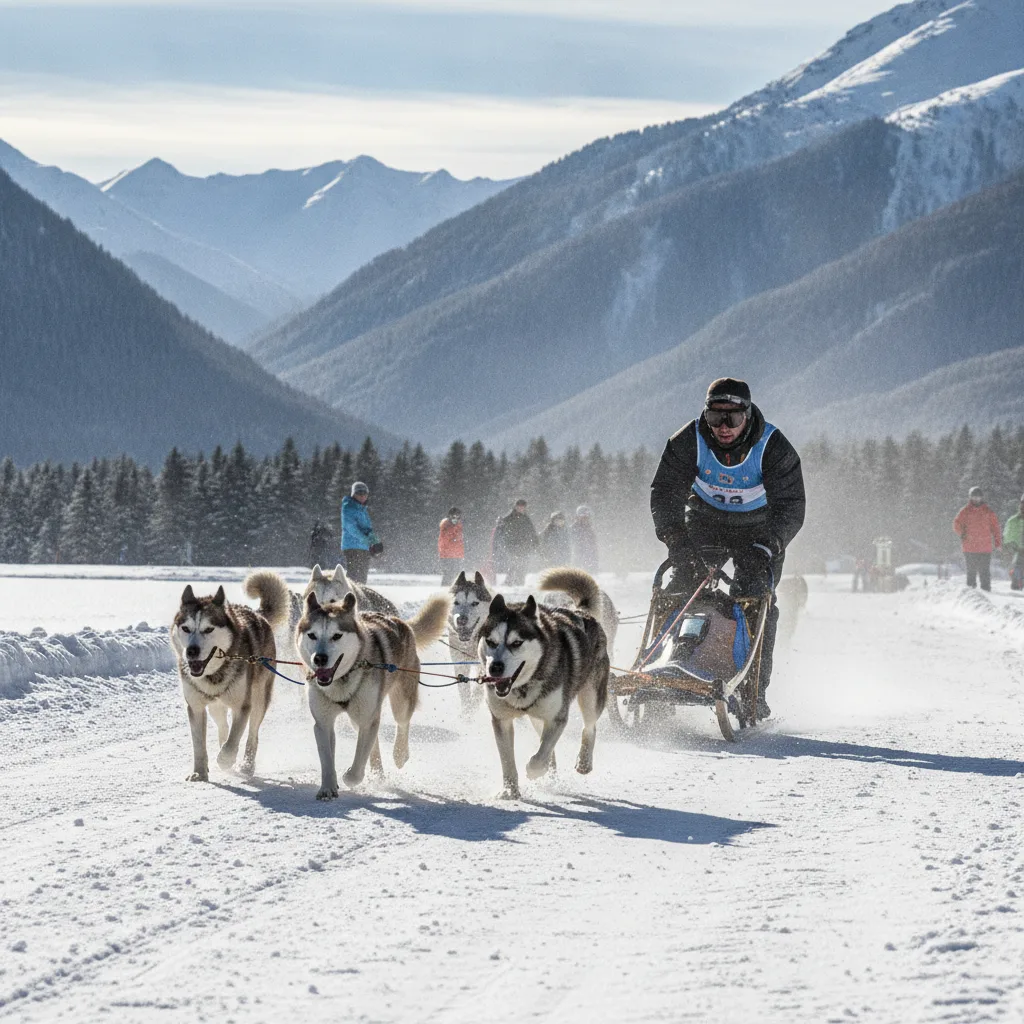
European mushing competitions became increasingly structured over the following decades. International bodies such as the International Federation of Sleddog Sports (IFSS) and the International Sled Dog Racing Association (ISDRA) work to harmonise rules, organise competitions and promote the different disciplines worldwide, from sprint formats to mid distance events.
The Rise of Sled Dog Tourism in Europe
How did mushing become a sport and a tourist activity in Europe? As racing grew, more people wanted to meet sled dogs and try the activity themselves. Snow tourism offered the perfect framework. Today, sled dog tourism in Europe is mainly associated with Finnish Lapland, northern Sweden, northern Norway, the Alps and the Pyrenees. These regions combine snowy landscapes, specialised operators and a local history of winter transport.

The offer has also evolved. Visitors can now take guided sled rides, learn the basics of driving a dog team, join multi day trips, visit the dogs' home and discover dryland activities when snow is lacking. This diversification has made mushing accessible to families, active couples, groups of friends and anyone curious about Nordic sled dog breeds.
Dryland Mushing in Europe
Is dryland mushing possible without snow? Yes. Mushing has adapted to regions where snow is seasonal or limited. Dryland disciplines use karts, bikes, scooters or running. Canicross links a runner to a dog with a waist belt and a bungee line, bikejoring connects the dog to a bicycle, and the dog scooter and rig allow teams to train on dirt trails.
According to a university study from Padua on sled dog welfare, the development of dryland mushing in Europe has allowed the sport to reach territories far from Arctic or alpine zones and to operate throughout the year. This is one reason why mushing now has enthusiasts in countries without long winters, including the Netherlands and Belgium, where dryland training is a natural way to stay active with dogs.
Sled Dog Welfare in Europe
Recognising responsible sled dog operators
The commercial growth of mushing has increased attention to the living conditions, training, rest, nutrition and veterinary care of sled dogs. Dog welfare is now a central topic in research and in public debate about sled activities. For visitors, a few simple criteria help assess a responsible operator.
When choosing a sled dog activity, you can look at:
the availability of regular veterinary follow up
the size and cleanliness of the dogs' home
the resting time given to the dogs between outings
limits on load and outing duration, and procedures in hot or dangerous conditions
transparency about retired dogs and the training of guides
Important
A well cared for sled dog is curious, relaxed and eager to run. Watching how the dogs behave with their musher before and after an outing tells you a lot about how they are treated.
Husky Adventure, Continuing the Tradition in the French Alps
At Husky Adventure, we see ourselves as part of this long lineage, from the Arctic peoples who first harnessed dogs to the mushers who brought racing to the Alps. Led by our musher Christophe Caron, our team lives alongside Alaskan huskies and Eurohounds, athletic dogs selected for their endurance and their friendly character. Our activity sites in Val Cenis and the Haute Maurienne Vanoise are less than 20 minutes from Val Cenis, Aussois and Bonneval sur Arc.

Our approach to competition reflects our values. We favour a mid distance philosophy in races, with longer resting times for the dogs, because their wellbeing comes first. The same principle guides our everyday activities.
In winter, we offer sled rides as passengers as well as introduction and advanced courses for those who want to drive their own team. In summer and in the shoulder seasons, our four seasons programme includes canicross, husky hiking, cani kart rides and visits to the dogs' home, where you can learn how our sled dogs live, train and rest. All our activities are guided in English, which makes them easy to enjoy for international visitors.
The Future of Mushing in Europe
The history of mushing in Europe connects ancient Siberian ancestry, Scandinavian traditions, polar expeditions, military logistics and modern sport. From the first European race in Switzerland in 1965 to the Pirena in the Pyrenees and the rise of dryland disciplines, mushing has constantly adapted to new territories and new expectations.
Today, its future depends on one essential element: the respect and care given to the dogs. Discovering mushing in the Haute Maurienne Vanoise is a way to experience this living heritage firsthand, alongside happy sled dogs and passionate mushers.
FAQ
What is the difference between a sled dog and a husky?
A sled dog is any dog trained to pull a sled or dryland equipment. Huskies are one family of sled dogs. Alaskan huskies are selected for performance rather than appearance, while Eurohounds combine sled dog lines with pointer type breeds for speed.
Can children take part in a sled dog activity?
Yes, many activities are adapted to children, especially passenger sled rides and visits to the dogs' home. Minimum ages vary depending on the activity, so it is useful to check the conditions before booking.
Do sled dogs enjoy running?
Sled dogs are naturally energetic and love to run, especially in cool weather. Their enjoyment depends on proper training, rest, nutrition and veterinary care, which is why responsible mushers adapt outings to each dog.
What do sled dogs do in summer?
In summer, sled dogs rest more and train during the cooler hours of the day. They take part in dryland activities such as canicross, husky hiking or cani kart outings, always with close attention to temperature.
Is skijoring a recent discipline?
No. Skijoring has deep roots in Scandinavian winter traditions, where dogs pulled skiers and pulkas across the snow. It has since become a recognised discipline within modern mushing.

Commentaires